
Aluminum extrusions for LED thermal assemblies
LED Heat Sink Profile
An LED Heat Sink Profile provides a mounting base and extended fin surfaces for transferring heat from an LED assembly to its surroundings. Aluminum Profile Works supplies finned aluminum profiles in standard and custom specifications for lighting manufacturers and OEM buyers. Share the section drawing, cooling conditions, mounting interface, finished lengths and quantity to request a quote.
Check the section and thermal requirements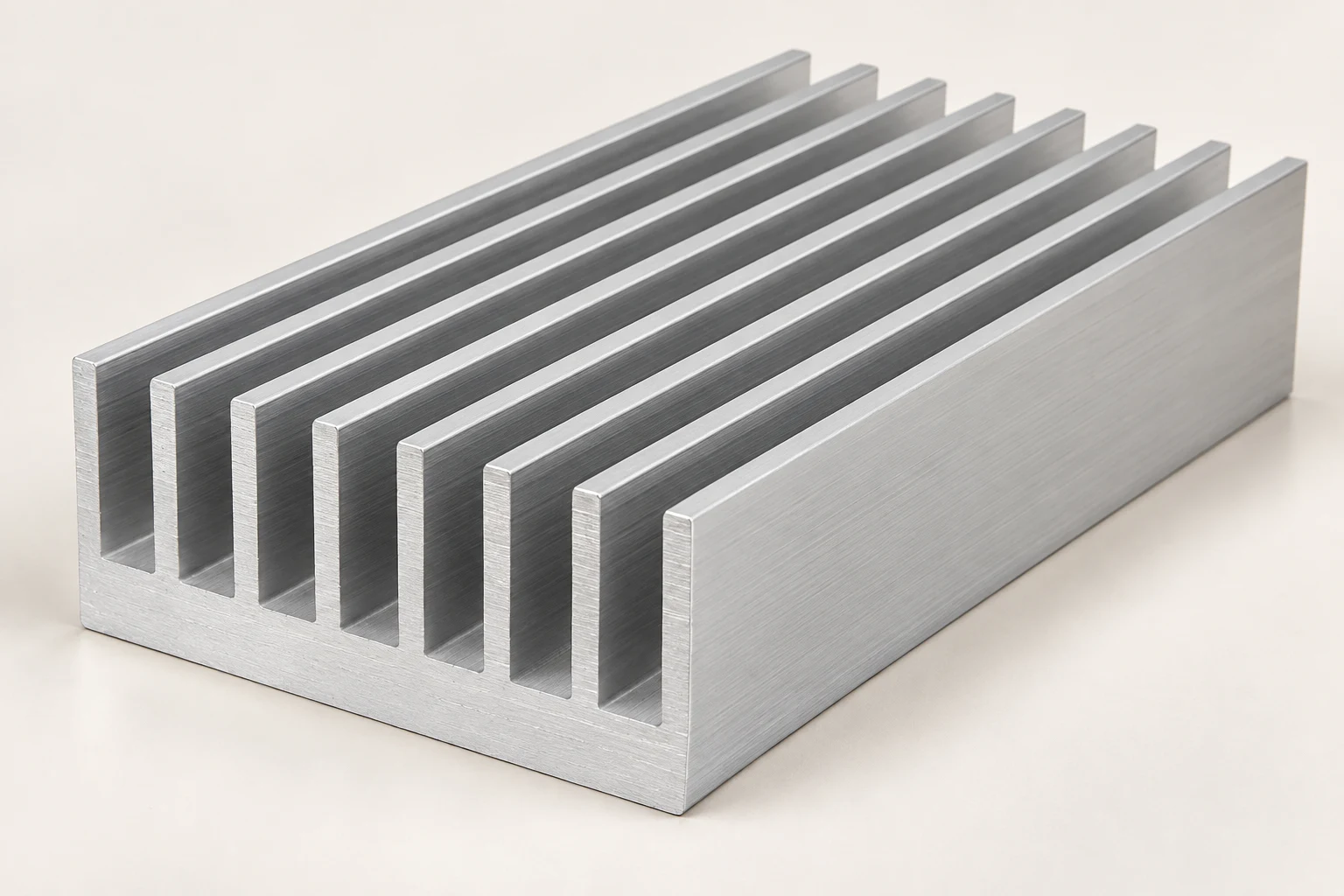
The continuous base and straight fin channels form a single extruded section.
Connect the extrusion to the lighting assembly
Select an LED Heat Sink Profile around the LED board, available space and heat path. The useful specification describes how the part fits and operates, rather than relying on a profile name or lamp wattage alone.
Standard sections or custom geometry
Start with an existing section reference or submit a dimensioned cross-section. Identify the features that must match and those that may change during the sourcing discussion.
A defined mounting interface
Show the board footprint, contact face and fastener pattern together. Distinguish the continuous extrusion from holes, threads or other requested secondary operations.
An actionable supply requirement
Specify material, finished length, finish, quantity and inspection criteria. Confirm these details in the quotation instead of assuming that every section shares the same supply condition.
LED Heat Sink Profile product information
- Profile category
- Heat Sink Profiles
- Product family
- Finned aluminum extrusions for LED lighting
- Section specification
- Standard and custom sections; define the base, fins, mounting face and finished length by drawing
- Supply specification
- Agree the product standard, material, tolerances and finished condition for the selected drawing
Standard section or custom extrusion?
Choose a sourcing route for your LED Heat Sink Profile according to the features that are already defined. A standard section still needs a confirmed drawing and finished-part specification.
| Selection point | Standard section inquiry | Custom section inquiry |
|---|---|---|
| Starting information | Section reference and dimensioned drawing | Proposed cross-section and mating-part drawings |
| Base and fin geometry | Check the existing envelope, base, fin height and spacing | Specify required geometry and identify flexible dimensions |
| Tooling | Confirm the selected section and tooling availability | Request a tooling and manufacturability review |
| Finished part | Define cut lengths, mounting details and finish | Define cut lengths, mounting details and finish |
| Thermal conditions | Provide heat load, ambient conditions and airflow | Provide heat load, ambient conditions and airflow |
Confirm section availability, alloy, temper, finish, machining, order quantity and delivery terms in the quotation. Neither route establishes a universal thermal rating.
Base, fins and surface details
LED Heat Sink Profile product views
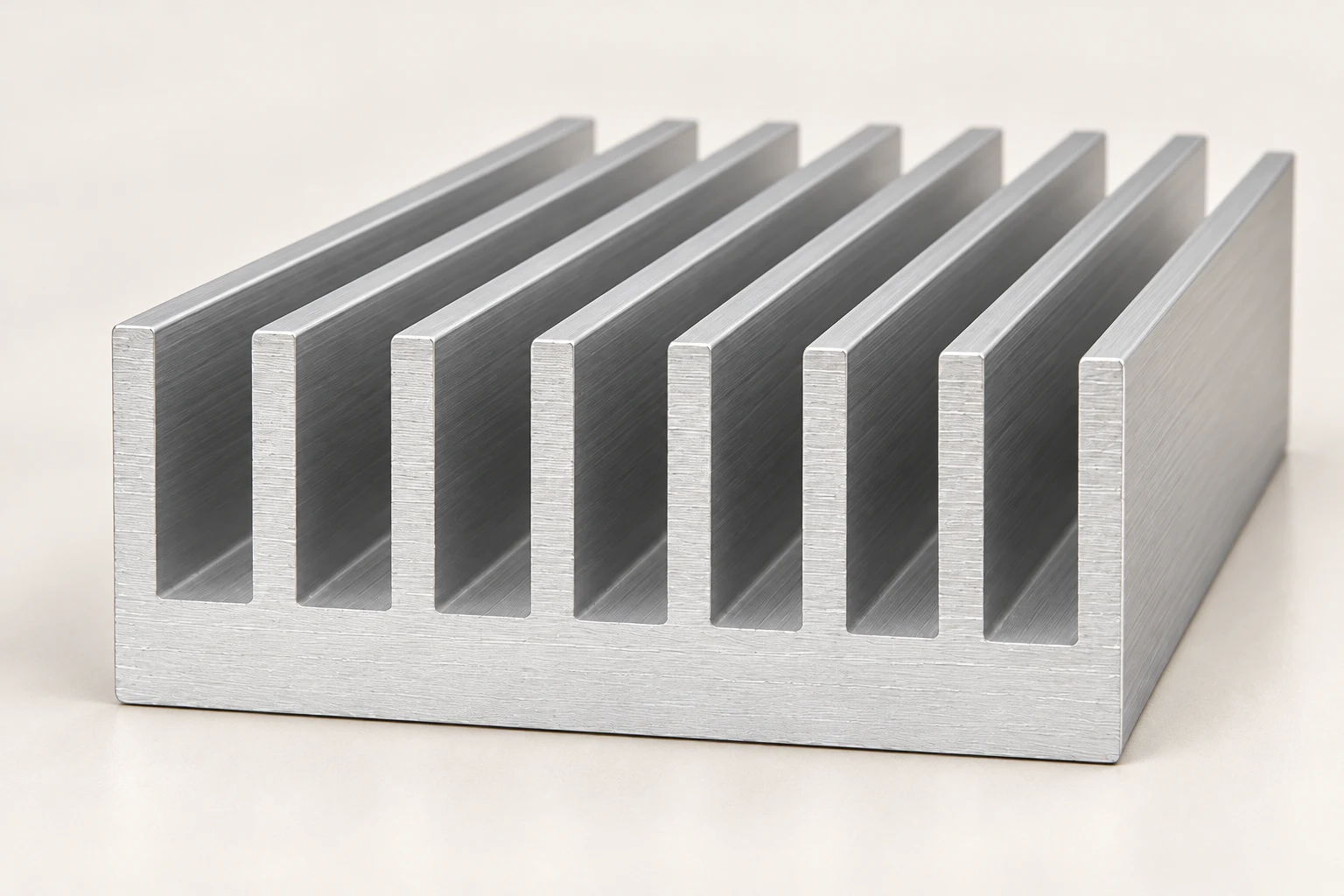
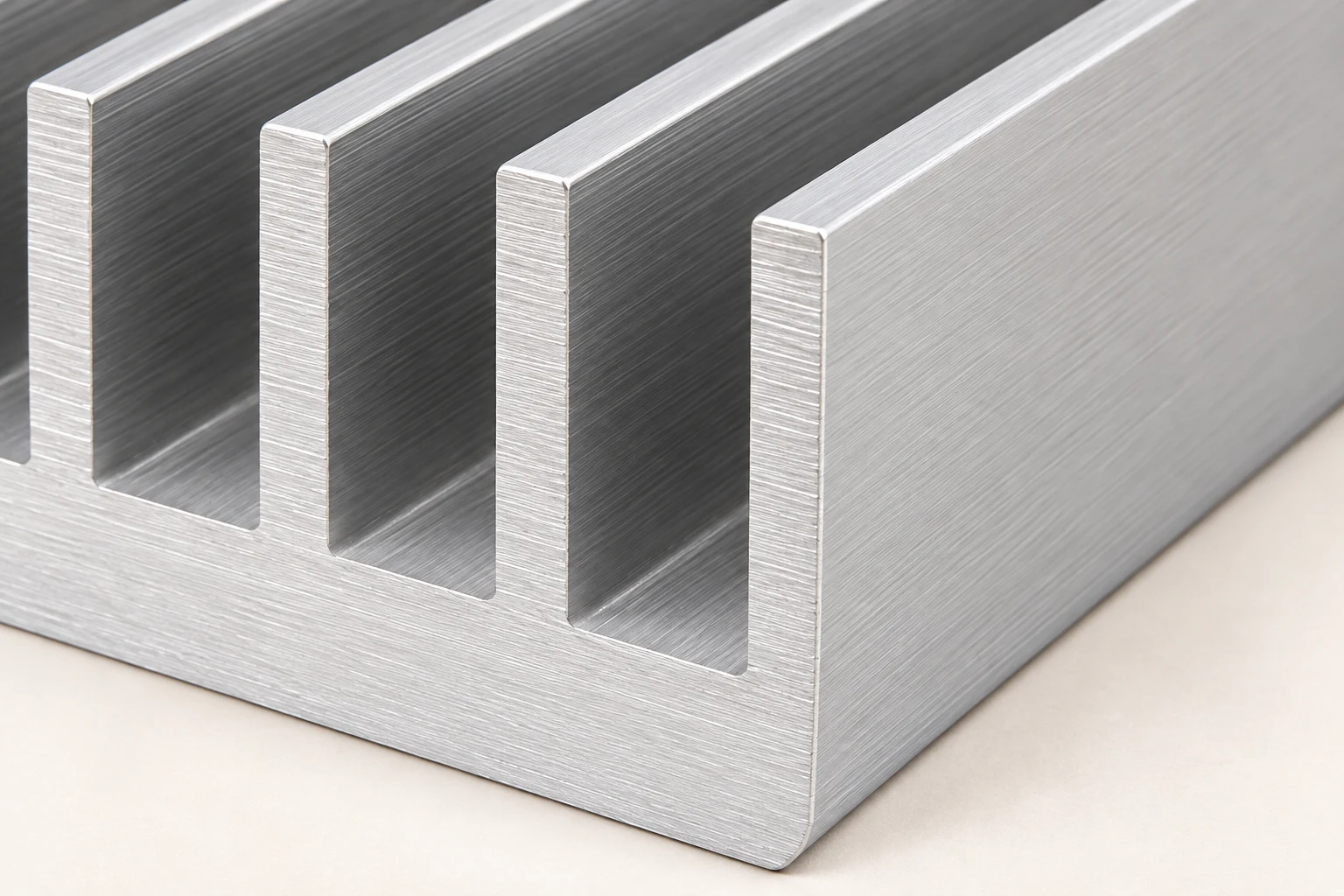
Define the selected cross-section, critical dimensions and finished supply condition on the order drawing.
Define the cooling conditions before choosing a section
An LED Heat Sink Profile operates within a thermal stack that includes the LED package, board and interface material. Lumileds explains that junction temperature depends on operating conditions and the complete thermal resistance to ambient. Preserve those conditions when comparing sections. [1]
- State the heat that must be dissipated and how it was estimated; lamp input power alone does not define the thermal requirement.
- Provide maximum ambient conditions, duty cycle and the relevant LED temperature limit from the component data sheet.
- Identify natural or forced convection, mounting orientation, enclosure restrictions and the available airflow path.
- Mark overall width and height, base thickness, fin height, fin thickness, clear fin spacing and finished length on the drawing.
- Define the board contact area, mounting face, fasteners, interface material and any flatness or surface requirements.
- Agree the thermal evaluation method and acceptance conditions for the complete lighting assembly.
Match the profile to the luminaire layout
Use the lighting layout to describe the required interfaces and operating environment. These application questions guide selection; the assembled product needs evaluation under its intended conditions.
- Linear LED modules
Define the board footprint along the base, mounting positions and available fin clearance. Include end connections and the finished length in the drawing package.
- Enclosed lighting assemblies
Identify enclosure clearances, ventilation openings and any contact with the housing. State where heat must leave the complete assembly, including restrictions around the fins.
- OEM lighting components
Provide the mating-part drawings, revision, quantities and inspection requirements needed to assess repeat supply of a defined part.
Prepare an LED Heat Sink Profile RFQ
Send the cross-section and finished-part drawing together with quantity, destination and requested delivery schedule. Identify which dimensions are fixed by the LED board or housing, and which may be discussed. Include requested alloy, temper, finish, cutting and machining requirements without assuming they apply to every profile. MOQ, tooling, price and lead time are confirmed for the selected requirement.
Check the base, fins and airflow together
A useful drawing separates geometric requirements from thermal conditions. Lumileds shows why fin area and airflow need to be considered together; Cree LED describes the board, interface and heat sink as parts of the complete heat path. [1, 2]
Base thickness and contact footprint
Dimension the base and locate the heat source. Review heat spreading, mounting stiffness and available space together rather than selecting thickness from appearance alone.
Fin spacing and airflow
More closely packed fins do not automatically improve cooling. Natural convection needs open flow paths; forced-air selection must account for the actual fan and channel conditions. [1]
Mounting face and interface material
Specify contact area and any required flatness. Include the interface material and bond-line requirements: filling air gaps and controlling the thermal interface are part of the assembly design. [2]
Extruded shape and finished operations
Separate the continuous section from requested cutting, drilling, tapping or face machining. Mark critical dimensions after finishing and identify inspection datums.
A drawing-led inquiry checklist
Use this checklist to organize an LED Heat Sink Profile inquiry. Replace each requirement with your project information before requesting a quotation.
- Section and revision
- Section reference or dimensioned cross-section, drawing revision and fixed mating interfaces
- Thermal conditions
- Heat load, ambient conditions, temperature limit, cooling method and installed orientation
- Finished supply
- Alloy and temper requirement, cut lengths, finish, mounting details and requested machining
- Order and acceptance
- Quantity, destination, requested schedule, critical tolerances and agreed inspection or thermal evaluation conditions
Keep unresolved items explicit in your inquiry so the quotation can identify the details that still need agreement.
Discuss this profile requirementAgree what to inspect before ordering
Connect the acceptance criteria to the approved drawing and assembly requirements.
Geometry and fit
Check the agreed envelope, base and fin dimensions, straightness, finished lengths and mounting features against the drawing revision.
Contact face and finish
Confirm the specified contact-face condition, edge treatment, finish and any masking requirements using the agreed inspection method.
Thermal evaluation
Record the assembly configuration, interface material, operating load, ambient conditions and airflow when comparing measured temperatures with the agreed targets.
LED thermal design resources
These technical guides explain selection principles and thermal evaluation. Their examples do not establish the performance or supply specification of an APW profile.
LED heat sink selection questions
What information is needed to select an LED Heat Sink Profile?
Provide the section drawing, board footprint, heat load, ambient conditions, temperature target and cooling method. Add mounting details, interface material, finished length and supply requirements so geometric fit and thermal suitability can be reviewed together.
Can I choose a heat sink from the LED wattage alone?
No. Input power does not define the complete heat path or the cooling environment. A meaningful comparison includes the heat to be dissipated, board and interface, ambient temperature, orientation and airflow. Validate the assembled lighting product under its intended operating conditions. [1, 2]
Do more fins always mean better cooling?
No. Extra surface area must remain accessible to airflow. Closely spaced fins can restrict natural convection, while forced-air designs depend on the available flow and fan conditions. Select the geometry for the cooling method rather than applying one fin-spacing rule to every section. [1]
Are alloy, temper and surface finish fixed for every section?
No single material or finish is assigned to this product family. Specify the required alloy, temper and finish in the inquiry and confirm the selected combination in the quotation. Thermal evaluation must use the agreed finished part and assembly conditions.
Can I request mounting holes or a machined contact face?
Include the hole pattern, thread details, contact-face requirements and inspection datums on the finished-part drawing. Requested operations are reviewed for the selected part and confirmed in the quotation; they are not implied by the continuous extruded section.
How do standard and custom orders differ?
A standard-section inquiry starts from a section reference and checks its fit. A custom inquiry starts from the required cross-section and includes tooling and manufacturability review. Both require agreement on material, finish, finished lengths, quantity, acceptance criteria and delivery terms.
Specify the profile around your LED assembly
Bring the section, mounting interface and cooling conditions together in one LED Heat Sink Profile inquiry. Send your standard-section reference or custom drawing with finished lengths and quantity to discuss the next step.
Browse aluminum profiles