
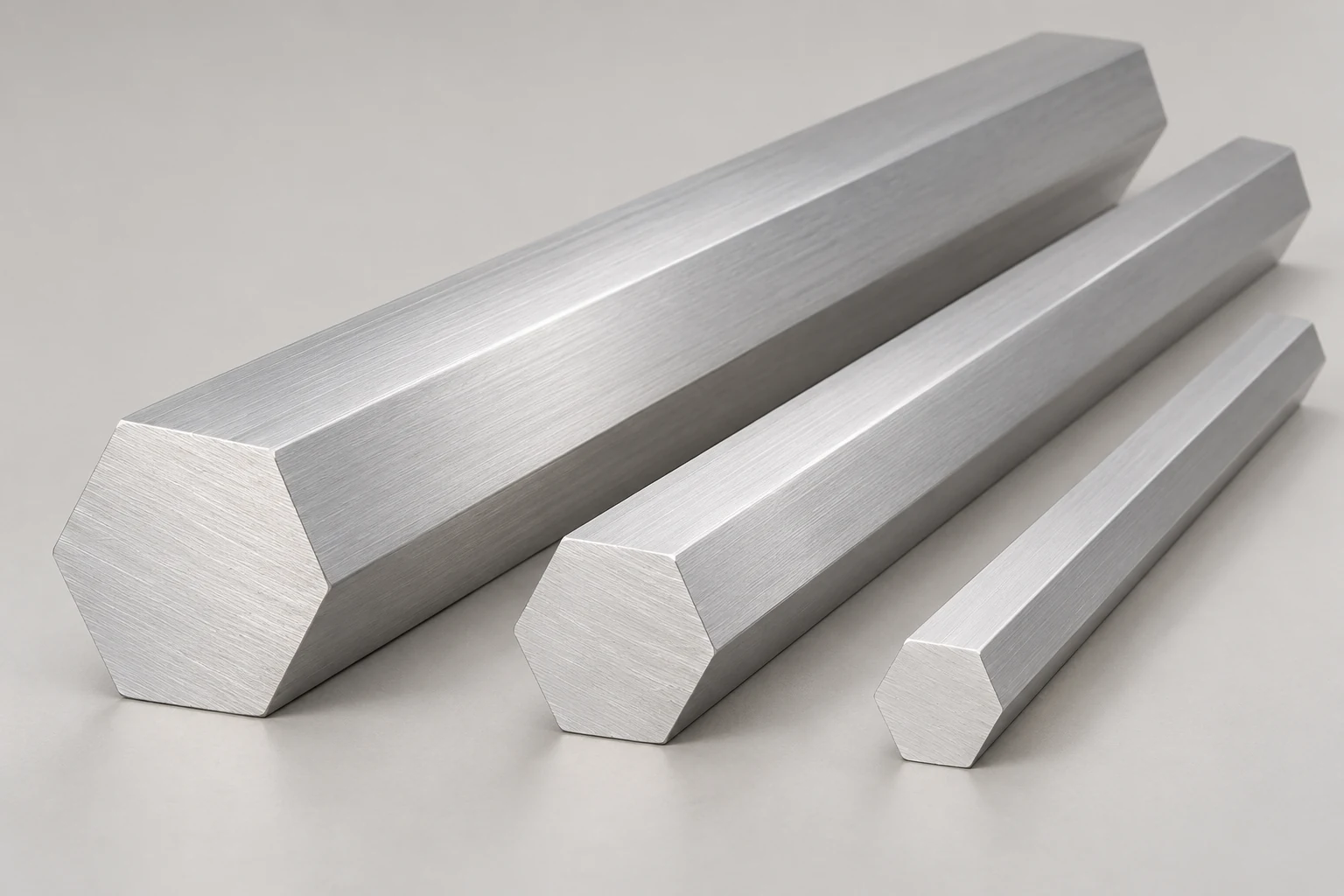
Aluminum Hex Bars
Hex Bar 6061-T6
- Section
- Solid hexagonal section; specify across-flats size, tolerances and cut length for supply confirmation
- Profile series
- Solid hex bar 6061-T6
- Alloy / temper
- 6061-T6
Source 6061 aluminum extrusion to your specification. Send APW your drawing, temper and quantity to start a sourcing review.
Browse 6061 Profiles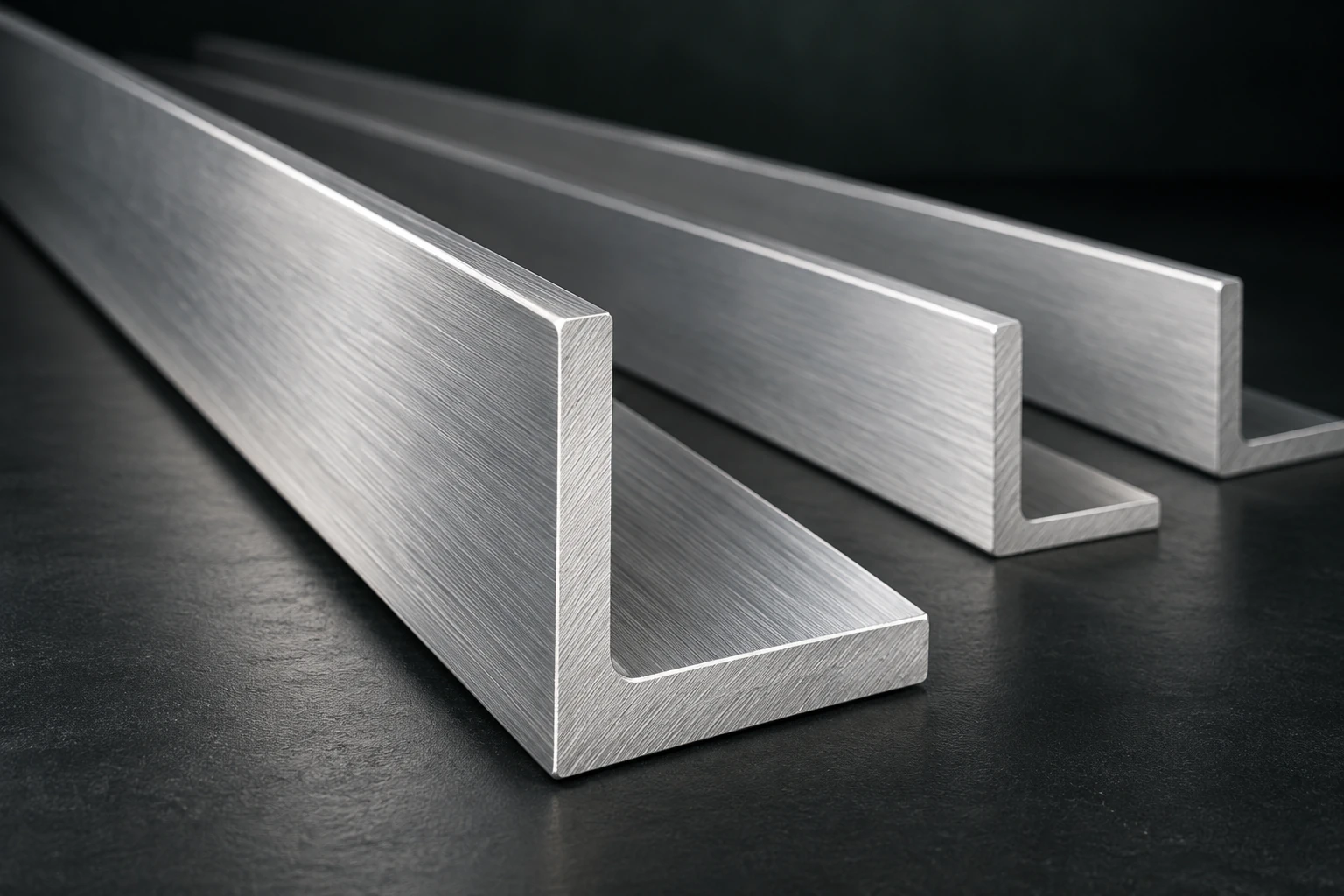
Published profile references
Start your 6061 aluminum extrusion inquiry with a matching catalog reference. Check the selected product's dimensions, manufacturing route and processing requirements; a catalog entry does not establish stock or suitability for your assembly.
Aluminum Hex Bars
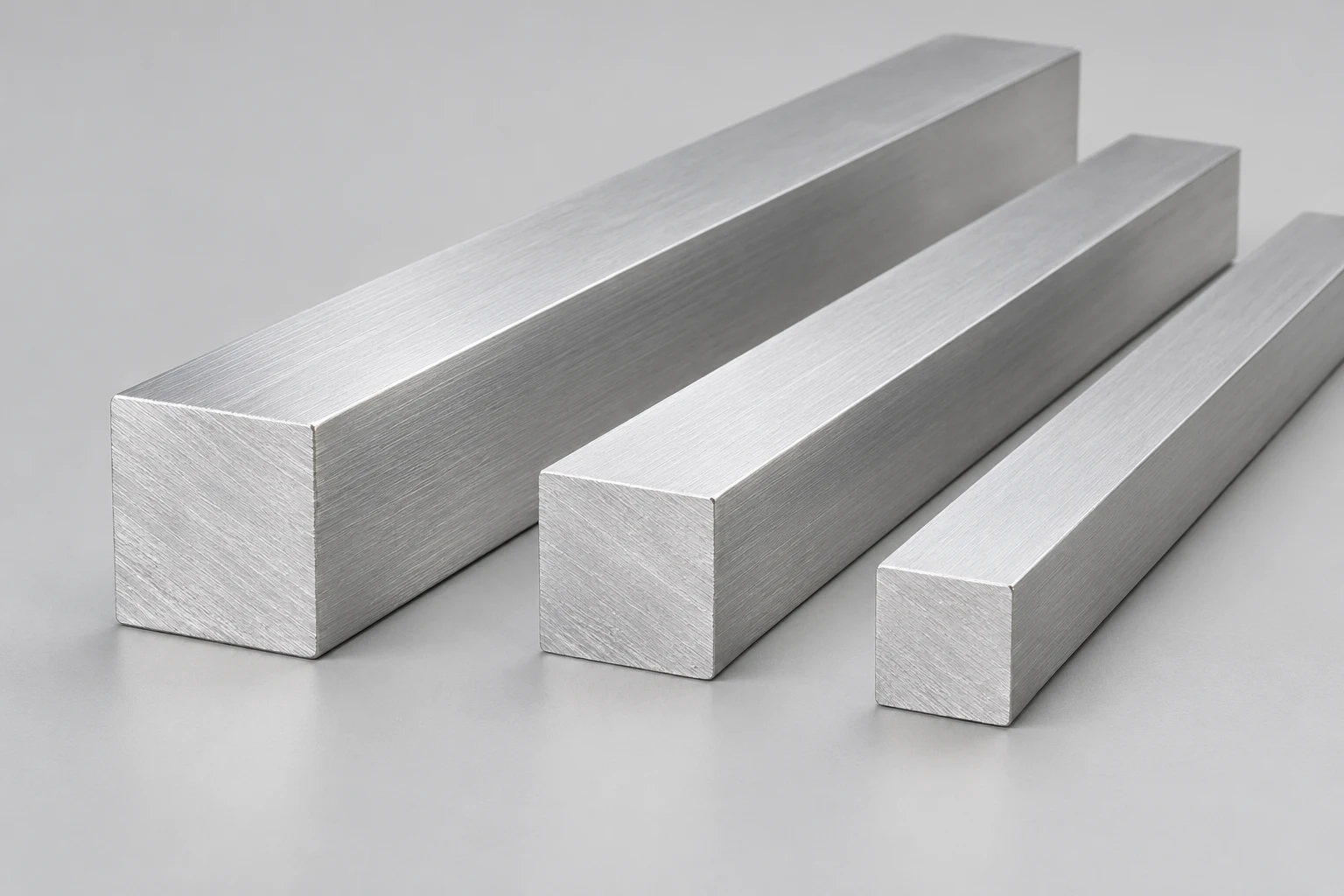
Aluminum Square Bars
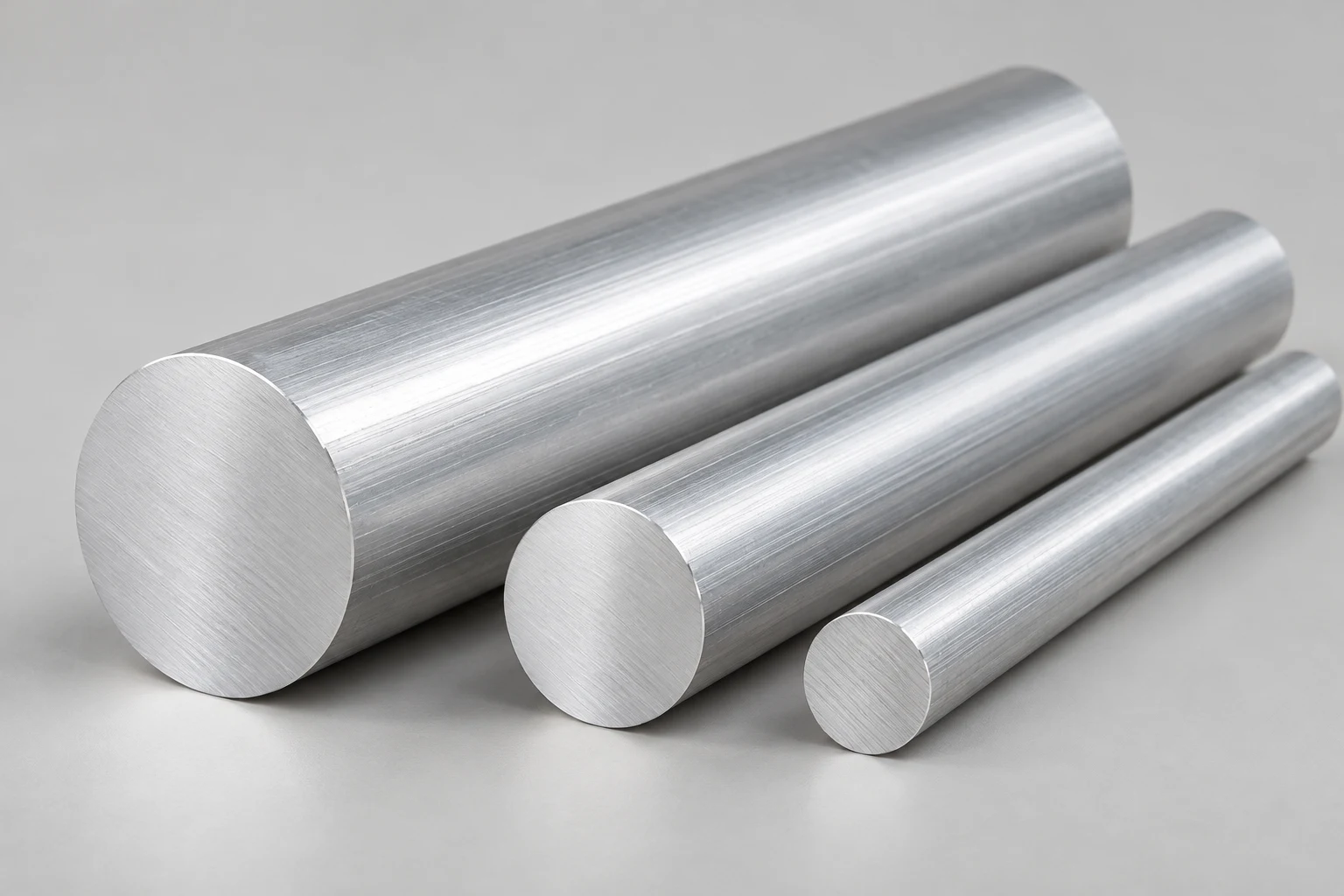
Aluminum Round Bars
Aluminum Angles
6061 aluminum extrusion combines a heat-treatable magnesium-silicon alloy with a defined cross-section. Its usefulness depends on the temper, geometry and fabrication sequence, rather than the alloy number alone.
6061 belongs to the 6xxx family. Heat treatment and aging affect its properties, so specify the full alloy-temper designation.
Use properties for the relevant product form, temper and section thickness. Material strength alone does not define a member's load capacity.
Identify machined faces, holes and remaining wall thickness before selecting the starting section and machining allowance.
Define the service environment and visible surfaces. Corrosion resistance does not remove the need to assess finish and contact with dissimilar metals.
Connect the drawing, applicable standard, inspection requirements and material documentation to the same order revision.
A useful 6061 aluminum extrusion specification describes the finished part and the operations needed to get there. Resolve these decisions before comparing quotations.
Describe the application, mating parts and exposure. Mark datum faces and fit-critical dimensions, and identify whether each requirement applies before machining or after finishing.
Provide the drawing revision, units, wall thicknesses, radii, length and straightness requirements. Separate the starting section from the finished part; confirm the manufacturing route and any custom tooling needs.
State T6, T6511 or another specified condition explicitly. Discuss machining, bending and welding before agreeing the condition in which material will be supplied.
Name the applicable standard and edition, the delivery stage for inspection, and the dimensions and records to check. Match these requirements to the same drawing revision used for the quote.
For a 6061 aluminum extrusion inquiry, distinguish the heat-treatment designation from any additional stress-relief requirement.
Temper descriptions are material-selection references. The agreed product specification and order determine acceptance; this table does not establish supplied properties or availability.
| Decision | 6061-T6 | 6061-T6511 | What to confirm |
|---|---|---|---|
| Basic treatment | Solution heat-treated and artificially aged | Solution heat-treated and artificially aged, with stress relief by stretching | Specify the full temper on the drawing and order. |
| Machining | Review material condition and machining sequence | Stretch stress relief can be relevant when controlling machining distortion | Agree allowances and finished dimensional checks; neither designation guarantees a distortion-free part. |
| Substitution | A specified delivery condition | A separately specified delivery condition | Obtain approval before changing the temper; do not treat the suffixes as interchangeable. |
| Mechanical acceptance | Depends on the applicable product specification | Depends on the applicable product specification | Check product form, thickness, standard edition and requested test documentation. |
Consider 6061 aluminum extrusion where strength and fabrication requirements lead the selection. Review 6063 when extrusion detail or cosmetic finishing carries greater weight.
Qualitative selection guidance, not a declaration of equivalent performance. Temper, geometry, processing and finish affect the outcome; changing alloy requires project approval.
| Priority | 6061 | 6063 | Buying decision |
|---|---|---|---|
| Strength | Often selected for higher-strength requirements | Often selected where moderate strength meets the requirement | Compare the actual tempers and applicable specifications, rather than alloy numbers alone. |
| Section complexity | Geometry and quenching requirements need review | Generally offers greater extrudability | Ask for a review of walls, detail, radii and section consistency. |
| Machining | T6 and T6511 are used for machined components | Suitability depends on the part and material condition | Define the machining operations and finished tolerances. |
| Anodized appearance | Can be anodized; cosmetic results need assessment | Worth considering when cosmetic appearance is critical | Agree the finish specification and representative appearance sample. |
For a 6061 aluminum extrusion part, distinguish starting-section requirements from finished dimensions. Mark the inspection stage beside each critical feature so the quote and receiving check use the same basis.
This is a drawing-review checklist. It does not assign numerical tolerances or establish a supplier's dimensional capability; agree those requirements for the selected section and processing scope.
| Stage | Dimensions to identify | What the drawing should state | Acceptance basis |
|---|---|---|---|
| Extruded section | Cross-section, wall thickness, supplied length and straightness | Units, drawing revision, relevant extrusion requirements and any machining allowance to agree | Measure the supplied section against the agreed order and applicable dimensional requirements. |
| Machined part | Finished length, hole locations, slots and machined mating faces | Datum references, critical tolerances, machining locations and the condition in which inspection is required | Check the finished features from the stated datums using the agreed measurement method. |
| Fit after surface treatment | Mating widths, clearances, holes and masked surfaces affected by finishing | Whether each fit dimension applies after finishing, plus masking and appearance requirements | Check the agreed final dimensions and appearance after the specified treatment. |
For 6061 aluminum extrusion, the required delivery condition should reflect subsequent fabrication. Include these operations in the inquiry rather than adding them after material selection.
Locate threads, bores and slots from named datums. Specify finished dimensions separately from the starting section, and agree allowances and inspection after material removal.
Provide the bend radius, direction and finished geometry. T6 is not a universal forming condition; more severe bends may need a softer condition and a reviewed treatment sequence.
6061 can be welded, but welding can reduce strength in the T6 weld region. Identify joints and the required finished condition so the assembly requirements can be reviewed.
State the finish, visible faces and masking needs. Identify mating dimensions to check after treatment, and agree an appearance reference separately from dimensional acceptance.
These application questions help define a 6061 aluminum extrusion requirement. They are starting points for specification, rather than approved designs or customer project claims.
Define support geometry, attachment points and mating dimensions. Identify surfaces that need machining rather than relying on the raw section.
Mark locating faces, datum references and threaded holes. State the finished tolerances so starting dimensions and machining allowances can be assessed.
Provide mounting interfaces and joint details. Separate raw-length requirements from the cutting, machining and finishing needed for the assembled part.
Identify joining operations, exposure and project-specific inspection requirements. A material choice alone does not qualify a transport assembly.
Describe any bends, welded connections and visible faces. Agree the delivery condition with the fabrication sequence and intended finish.
Define exposed surfaces, touch points and appearance acceptance. Include masking and finished-fit requirements where a coating meets another component.
Keep each 6061 aluminum extrusion quotation tied to the same drawing and acceptance requirements.
An inquiry for 6061 without temper, section and length leaves important decisions open.
Include the full designation and drawing revision.
Extruded and further-processed bar can have different requirements. A round, square or hexagonal section does not establish the manufacturing route.
Confirm product form and applicable standard with the selected reference.
A raw length and a finished, machined part are different purchasing requirements.
Align cutting, machining, finish, inspection, packing and delivery terms before comparing totals.
Prepare your inquiry
Send the known 6061 aluminum extrusion requirements and identify open decisions. Clear inputs help separate material selection from the details still needing agreement.
This 6061 aluminum extrusion example starts with a buyer's section and quantity, then identifies the drawing details still needed for review. The dimensions describe an example request, not a confirmed catalog size.
Use these two hypothetical 6061 aluminum extrusion purchasing scopes to check inclusions and exclusions. Carry the same drawing revision, material designation and quantity into each quote request.
| Comparison item | Cut-to-length material | Part processed to drawing |
|---|---|---|
| Material and temper | Specified alloy and delivery temper | Specified alloy and required condition after agreed processing |
| Length and dimensions | Section and cut length as ordered; machining allowance to agree | Finished length and critical dimensions from the agreed drawing and datums |
| Holes, slots and machined faces | Not included in this example scope | Included only where identified in the agreed machining scope |
| Surface treatment | No additional surface treatment specified in this example | Treatment, masking and appearance requirements as agreed |
| Inspection and records | Agreed material records and checks for the supplied section | Agreed material records plus inspection of specified finished features |
| Packing and identification | Protection and labels for the ordered lengths | Protection for finished faces and features, with part and batch identification as agreed |
| Delivery scope | State destination and delivery basis separately | State destination and delivery basis separately; confirm which processing and packing costs are included |
These are purchasing examples, not priced offers or confirmed APW processing packages. Agree the operations, documents, inspection stage and exclusions before comparing totals.
Agree how the 6061 aluminum extrusion order will be protected, identified and checked. Use the order, drawing revision and delivery stage as the receiving reference.
Before dispatch, define separation and protection for visible faces, ends and machined features. Agree labels that connect packages to the order and parts.
At receipt, compare package labels, part references, quantities and drawing revision with the order. Record any missing or mismatched identification.
Check critical dimensions at the specified delivery stage. Use the agreed datums and measurement method; raw-section checks do not replace finished-part checks.
Look for damage, burrs and appearance differences, and match requested material or inspection records to the identified batch. Visual checks alone cannot establish alloy, temper or strength.
Record the affected quantity, package or batch reference, photos and measured results. Compare the issue with the agreed requirement and send the details for resolution.
Technical sources
Use these sources to understand alloy and temper choices, then connect the relevant requirements to your drawing and order.
6061 temper definitions, fabrication considerations and property conditions; Hydro's product data is not an APW supply commitment.
The relationship between alloy families, heat treatment and temper designations.
Context for comparing alloy strength, extrudability and processing requirements; automotive examples do not qualify a specific part.
Guidance on discussing dimensional requirements and selecting applicable tolerance references.
The relationship between cutting, deburring and subsequent fabrication operations; confirm the process scope for the selected part.
Resolve material and specification questions before submitting the final purchasing requirement.
Define the section, temper and inspection stage for your 6061 aluminum extrusion RFQ. Share the drawing, quantity and destination with the processing, packing and acceptance requirements so the quotation and receiving checks use the same scope.